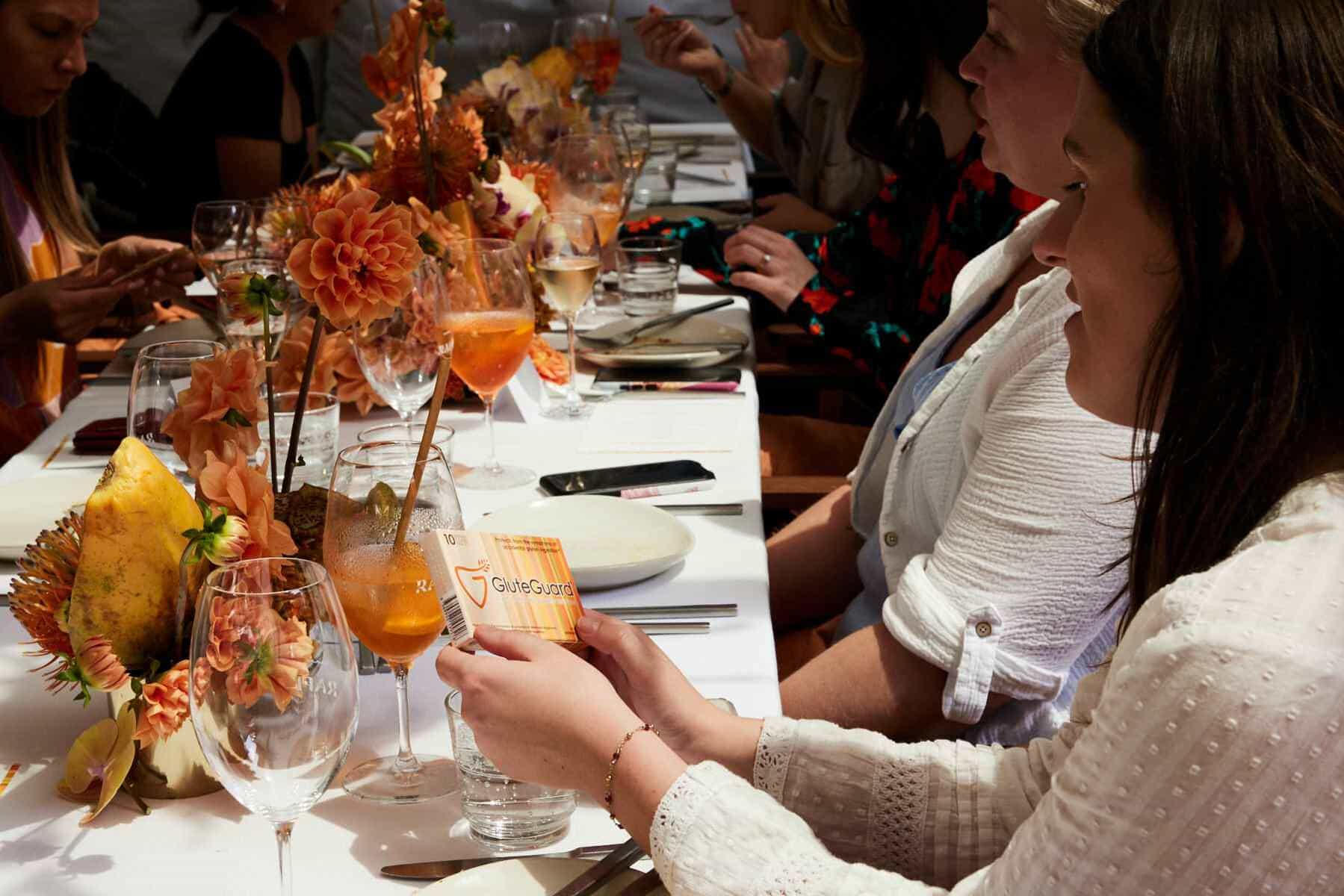
When is the best time to take GluteGuard before eating? What if you’ve already taken it but your food takes longer to arrive than expected? What if your meal is served over several courses, or you only remember after you’ve started eating?
If you’ve asked yourself these questions, the main thing to remember is that GluteGuard is designed to provide proactive protection and should be taken before you start eating. The good news is that the timing doesn’t need to be precise.
To make timing easier to understand, this guide explains:
- Why taking GluteGuard before eating is important
- The recommended timeframe
- What to do in different dining situations
- Practical cues to make it part of your pre-meal routine
Why “Before Your First Bite” Is the Important Part
GluteGuard follows the same principle as putting on sunscreen before going out in the sun or fastening your seatbelt before you start driving: you put protection in place before you might need it.
With GluteGuard, that protection comes from its active ingredient, an enzyme extracted from the skin of unripe papaya called Caricain. This natural enzyme can specifically target and break down the digestion-resistant gluten peptides into smaller, harmless fragments before they interact with the intestinal lining and trigger symptoms.1
For Caricain to be ready to help act on gluten accidentally consumed in a meal, the enzyme should preferably be released in the upper small intestine (duodenum) ahead of the meal. GluteGuard’s enteric coating helps make this possible by protecting Caricain as the tablet passes through the acidic environment of the stomach. Once the tablet reaches the pH of the small intestine, the coating quickly dissolves and releases the enzyme where it is needed to help protect from symptoms of accidental gluten ingestion.*
Learn more about how GluteGuard works.
So, how long before eating should you take GluteGuard?
The directions on the pack advise taking one whole GluteGuard tablet immediately before a meal. But “immediately” doesn’t mean you need to wait until the exact moment you take your first bite. In practice, you can take it around five minutes before you eat, and as early as 15 minutes beforehand, giving you some room to fit it in at a convenient point before your meal begins.
There is no single optimal minute, as digestion varies between people and can be influenced by individual health factors and the meal itself. So, whether you take GluteGuard one, five, ten or fifteen minutes beforehand, all are suitable options.
The important part will always remain the same: taking GluteGuard before you eat, allowing it to travel through your digestive system and release Caricain in the small intestine, ready to help break down gluten that may be hiding in what should be a gluten free meal.
In short: take GluteGuard before you eat, with flexibility from immediately before your first bite to as early as 15 minutes beforehand.
Can you take GluteGuard after eating?
GluteGuard is not intended or researched when taken after finishing a meal. It’s also not designed to be used to relieve symptoms that have already started. Its enzyme, Caricain, acts on gluten peptides during digestion, not on the symptoms themselves.
If you remember partway through your meal, take a GluteGuard tablet before continuing to eat. While it may not provide protection against gluten you may have already unintentionally consumed, GluteGuard’s enzymes can still help break down gluten that may be accidentally consumed in the remainder of that meal after taking the tablet.
This is why GluteGuard is best used proactively, and in conjunction with a strict gluten free diet, before meals intended to be gluten free where there is a risk of accidental gluten ingestion.
What if you’re eating multiple courses?
Not every GluteGuard moment is one plate of food. A party or celebration, for example, can involve grazing on snacks and eating several courses throughout the event.
For situations like this, we recommend taking one GluteGuard tablet before you begin eating as usual, then another tablet after approximately one hour or with a course served later. By then, your first tablet is already active and moving through the digestive tract, where it can act on gluten accidentally consumed from earlier in the meal. The second tablet helps top up enzyme activity and continue protection for the food still to come.
Note: only one tablet is recommended for a standard meal, and the maximum daily dose should not exceed four tablets, unless otherwise recommended by a healthcare professional.
Easy ways to remember GluteGuard before eating
Dining out gluten free already involves a few familiar steps, from checking the menu to confirming your order and asking how the food is prepared. Taking GluteGuard is easy to add as part of that pre-meal routine.
With the timing guidance above in mind, here are a few simple cues people use to help them remember:
- When eating out, take GluteGuard after you’ve placed your order if you expect your meal to arrive within the next 15 minutes.
• If the wait is less predictable, keep the pack on the table beside your cutlery or drink as a prompt to take it when your food arrives. - When ordering takeaway, use the “ready for collection” or “arriving soon” notification as your cue, depending on how you’re receiving your order.
- If you’re enjoying a long meal, set a reminder for approximately one hour after your first tablet so you know when to take another if you’ll still be eating.
- Keep a pack in your handbag, work bag or somewhere else you can easily reach when an unplanned meal comes up.
References:
*GluteGuard helps protect those with medically diagnosed gluten sensitivity from symptoms of accidental gluten ingestion. Always read the label and follow the directions for use. For use only in conjunction with a gluten free diet.