Beer labels using terms like “low gluten” and “gluten-reduced” are becoming more common as demand for gluten free options continues to grow. For people who need to avoid gluten, these terms often raise the question: is gluten-reduced beer safe as part of a gluten free diet?
While gluten-reduced beers may suit some drinkers, they are not considered a suitable option for people who need to follow a strict gluten free diet. To explain why, we turned to TWØBAYS Brewing, Australia’s first dedicated gluten free brewery, which brews exclusively without barley, wheat, rye, or oats.
In this guide, TWØBAYS draws on recent research to explain what gluten-reduced beer is, how it differs from gluten free beer, and what the evidence shows about its safety as part of a gluten free diet.
Table of Contents
What is gluten-reduced beer?
Gluten-reduced beer is brewed using barley (a gluten containing grain) and relies on clarifying enzymes and filtration to break down the gluten proteins during the brewing process. This approach has become the standard for European brewers, and some Australian breweries have adopted the same technique to market their beers to a broader audience. In some cases, these techniques reduce the amount of gluten to below 20 parts per million (ppm) using standard commercial testing methods, which then meets the requirements to be labelled “low gluten”.
This differs from gluten free beer, which is made without barley, wheat, rye, or oats, using naturally gluten free grains, and does not rely on gluten reduction techniques.
Do gluten-reduction techniques reduce the gluten in beer enough for a gluten free diet?
For people who need to avoid gluten, recent research from Edith Cowan University (ECU) has shown these gluten-reduction techniques do not reliably remove gluten from beer brewed with gluten-containing grains, and that some gluten-reduced beers contain gluten proteins at levels comparable to regular beers. As a result, these beers cannot be considered safe for people who need to follow a strict gluten free diet.
As Professor Colgrave, one of the study’s researchers, explains, “in practice most low-gluten products have detectable gluten”, advising that people following a strict gluten free diet “should avoid beer made using cereal grains (wheat, barley & rye) irrespective of the gluten reduction method. Despite the reduced gluten label, there is a risk that it still contains gluten protein.”
What did the study find about gluten-reduced beer?
Researchers tested a range of gluten-reduced beers from around the world, including one Australian beer marketed as a low carb, low gluten lager.
The study highlighted two key issues:
- Currently available testing methods have limitations when verifying the absence of gluten in ‘low gluten’ beer.
Nine beers labelled “low gluten” were tested using ELISA (enzyme-linked immunosorbent assay), the standard method used by food testing laboratories to estimate the amount of gluten present in a food or beverage. All nine measured below the 20 mg/kg (ppm) ‘low gluten’ threshold using this method.
The same beers were then analysed using LC-MS (liquid chromatography-mass spectrometry), a more sensitive technique that can identify specific gluten-derived proteins and peptides. LC-MS detected gluten proteins derived from barley, known as hordeins, in every beer tested, and several of the beers also showed equivalent or higher hordein content than some control beers. Importantly, this does not mean the low gluten beers tested above 20 ppm. The comparison was based on the specific hordein proteins detected by LC-MS, rather than an estimate of the beer’s gluten content, as provided by ELISA.
These findings show that a beer measuring below 20 ppm using ELISA may still contain detectable gluten-derived proteins. In other words, meeting the “low gluten” threshold does not mean gluten has been shown to be absent from gluten-reduced beer. Cross contamination is a genuine risk.
Eight of the nine beers labelled “low gluten” tested contained trace levels of wheat-derived gluten peptides, despite not being brewed with wheat as an ingredient. The researchers concluded that these wheat proteins were introduced inadvertently, either as a raw ingredient or through contamination at some point in production process, demonstrating that such contamination can occur even in beers marketed as “low gluten”.
So, is gluten-reduced beer safe for a gluten free diet?
Based on current evidence, the answer is no.
While gluten-reduction techniques can lower the amount of gluten detected by standard testing, these methods do not reliably confirm the absence of gluten in fermented beverages like beer. In addition, when beer is brewed using the same equipment as barley-based beers, the risk of cross-contamination is difficult to eliminate.
Importantly, breweries marketing “low gluten” beer are not deliberately misleading consumers. These products may be appropriate for people who are not required to follow a gluten free diet.
However, for those who must avoid gluten for medical reasons, the limitations of current testing methods mean gluten-reduced beer cannot be considered a gluten free option.
What beer label should you look for on a gluten free diet?
Gluten content labels play an important role in informing food choice, and people following a gluten free diet need to be able to rely on them to avoid accidental gluten ingestion. Under Australian Food Standards, there are two permitted gluten-related labelling claims for beer: “gluten free” and “low gluten.”
For beer to be labelled “gluten free”, it must not be brewed with barley, wheat, rye or oats. Instead, the beer must be made using certified gluten free alternative grain malts such as rice, millet, buckwheat, sorghum, or corn, and contain no detectable gluten (typically below the limit of detection, around 3 ppm).
A “low gluten” claim is permitted for beers made with barley that uses enzymes and filtration to reduce gluten levels to below 20 ppm, followed by testing using commercially available methods.
For those who need to follow a gluten free diet, choosing beer labelled “gluten free” rather than “low gluten” is the best option for a strict a gluten free diet. As Richard Jeffares, Founder and CEO of TWØBAYS, explains, “there is no middle ground.”
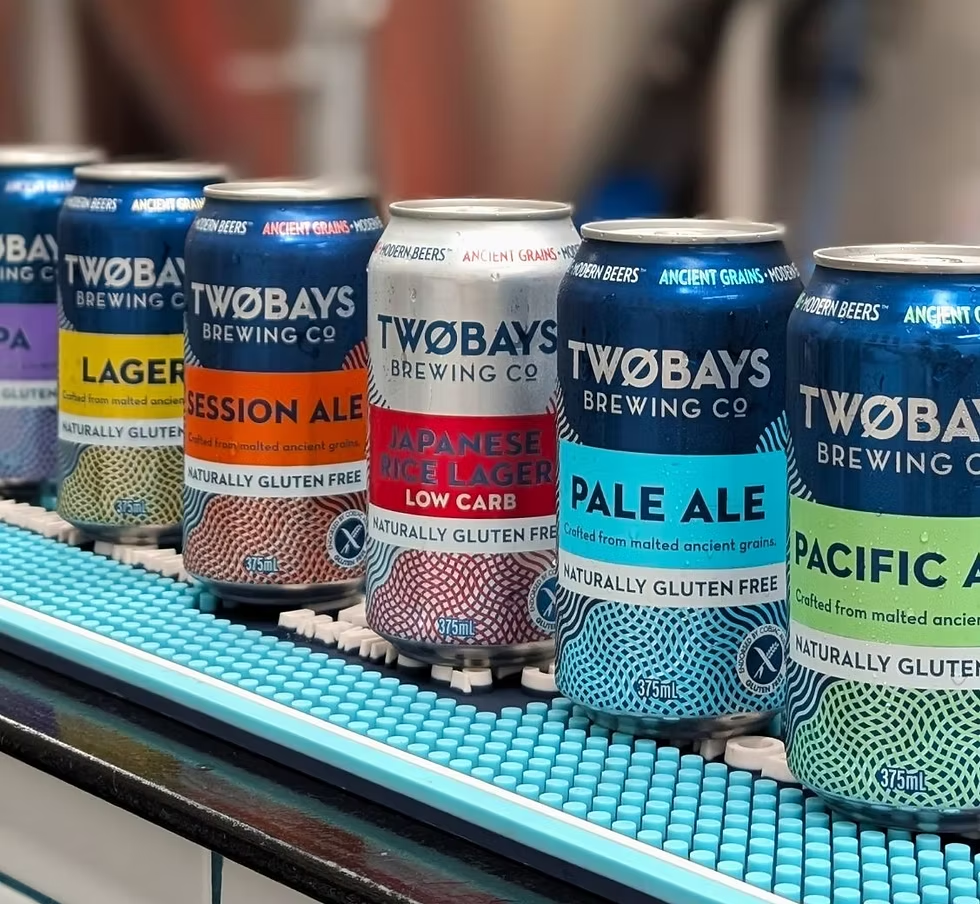
Seeking out a beer with the Coeliac Australia endorsement logo, like the TWØBAYS range, is one of the clearest ways to identify a product that meets strict gluten free standards.
Why don’t more breweries use naturally gluten free grains?
Naturally gluten free grains such as millet and rice malts behave very differently to barley in the brewing process. They are smaller and more difficult to mill, mash, sparge, and ferment, and it can be challenging to extract the right flavours from them. Compared to barley, these grains are also significantly more expensive.
In addition, the research from ECU has shown that without a dedicated gluten free brewing facility, cross-contamination is extremely difficult to avoid.
Fortunately, breweries are demonstrating that great beer can be brewed using naturally gluten free grains in dedicated gluten free facilities, creating safe beer options for people who follow a strict gluten free diet. TWØBAYS brew exclusively with naturally gluten free malted grains, in a custom-built brewery that has never touched barley, wheat, oats or rye.
And it is possible to make great beer without the gluten.
The TWØBAYS Session Ale, winner of Champion Specialty Beer at the Australian Independent Beer awards 2023, ahead of dozens of gold medal winning barley beers. TWØBAYS beers were then recognised as the best gluten free beers at the World Beer Cup in 2024 and 2025 and placed second to a US brewery in 2026.
More recently, TWØBAYS was named Champion Australian Brewery at the New Zealand Beer Awards, ahead of several well-known and much larger breweries producing traditional barley beer. The recognition shows choosing 100% gluten free beer doesn’t mean compromising on quality.


Co-authored by Nicole Marie
Nicole Marie is an Accredited Practising Dietitian and founder of the Gut Health Group, a dietitian-led clinic focused on helping people navigate digestive conditions with clarity and confidence. Committed to evidence based care, personalised treatment and practical strategies that reduce symptoms, restore gut function and support long term health.
Co-authored by Nicole Marie
Nicole Marie is an Accredited Practising Dietitian and founder of the Gut Health Group, a dietitian led clinic focused on helping people navigate digestive conditions with clarity and confidence. Committed to evidence based care, personalised treatment and practical strategies that reduce symptoms, restore gut function and support long term health.